
Cloud kitchens have moved well past their early “delivery-only experiment” phase. What started as a low-cost way to test concepts without the overhead of a dining room has become a serious operating model in its own right — with its own economics, its own risks, and its own opportunities. Here’s what’s actually shaping the space right now.
Multi-Brand Kitchens Are Becoming the Norm
Running a single delivery brand out of a commercial kitchen rarely makes the unit economics work on its own. The operators seeing real margin are the ones running two, three, or more virtual brands from the same physical kitchen — sharing rent, labor, and equipment costs across multiple revenue streams, each targeting a different cuisine or customer segment on the delivery platforms.
Platform Dependency Is Being Actively Managed
Early cloud kitchen operators leaned almost entirely on third-party delivery platforms for discovery and orders — and paid heavily in commission for it. The trend now is toward diversification: building direct ordering channels, owned customer data, and loyalty programs alongside platform listings, rather than depending on any single aggregator for survival.
Packaging Has Become a Brand Touchpoint, Not an Afterthought
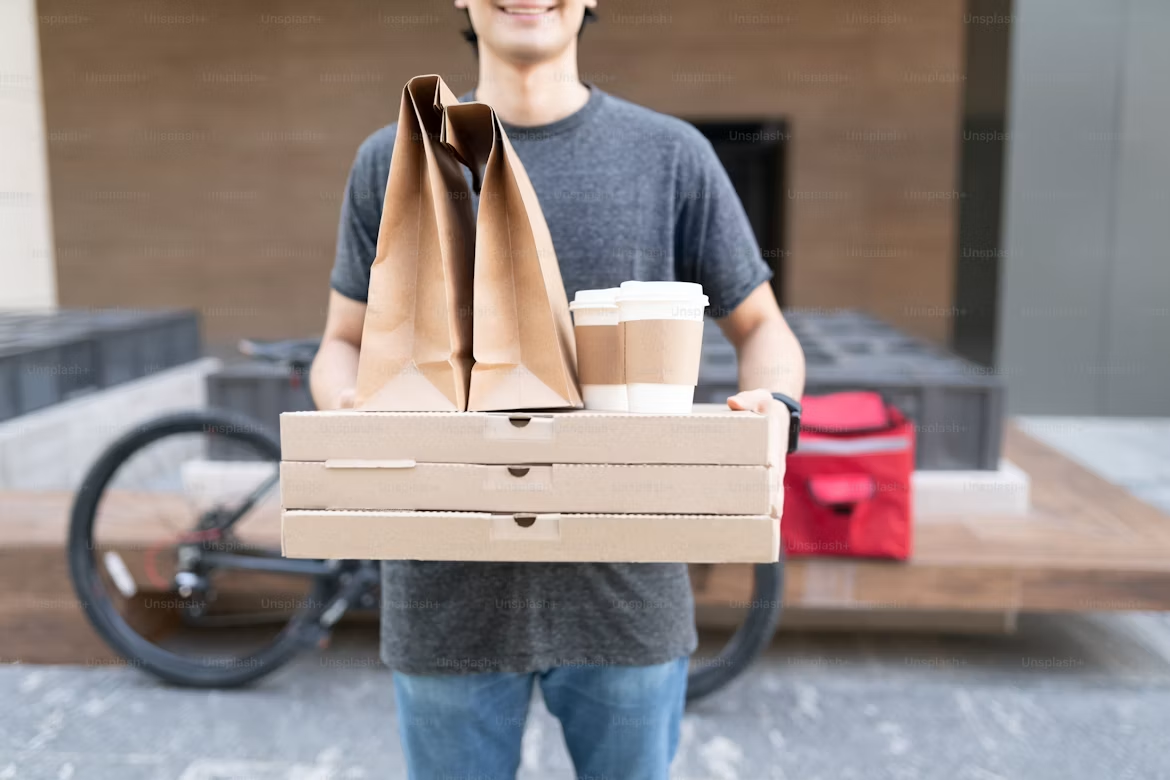
When your guest’s entire experience of your brand is a delivery bag arriving at their door, packaging carries more weight than it ever did in a traditional restaurant. Operators are increasingly treating packaging design, food travel quality, and unboxing experience as core to the concept, not a logistics detail to solve last.
Kitchen Design Is Optimizing for Speed, Not Seating
Cloud kitchens don’t need a dining room, but they do need a layout built entirely around throughput — minimizing steps between stations, prioritizing packaging efficiency, and designing for peak-hour order spikes rather than steady in-person service. This is a meaningfully different design brief than a traditional restaurant kitchen.
Data Is Driving Menu and Location Decisions
Because every order flows through a digital platform, cloud kitchen operators have far more granular data than traditional restaurants — which items sell, at what times, from which micro-locations. The trend is toward using this data actively: rotating menus by demand, testing new concepts cheaply, and choosing kitchen locations based on delivery radius analytics rather than foot traffic.
Consolidation Is Coming
As the market matures, the operators without disciplined unit economics — those relying on venture funding rather than actual kitchen profitability — are increasingly being squeezed out or acquired. The next phase of cloud kitchen growth looks more like traditional hospitality operations: disciplined margins, real profitability, and less reliance on hype.
What This Means for Operators
The opportunity in cloud kitchens hasn’t gone away — if anything, it’s more structurally sound than it was a few years ago, now that the model has been stress-tested. But succeeding in this space increasingly requires the same operational discipline as any hospitality business: tight food cost control, smart menu design, and a real strategy for customer acquisition that doesn’t depend entirely on platform commissions eating your margin.
If you’re exploring a cloud kitchen concept or looking to make an existing one more profitable, book a consultation with Origin Hospitality Consultants.
Leave a Reply